Send OEM number, quantity, destination, or photos. We will reply with quotation, lead time, and fitment notes.
Fitment checkOEM number, engine model, and machine model confirmation.
Manual quotePrice, MOQ, stock, lead time, and replacement options.
Export supportPacking notes, mixed order support, and shipping details.
Product Details
Product Overview
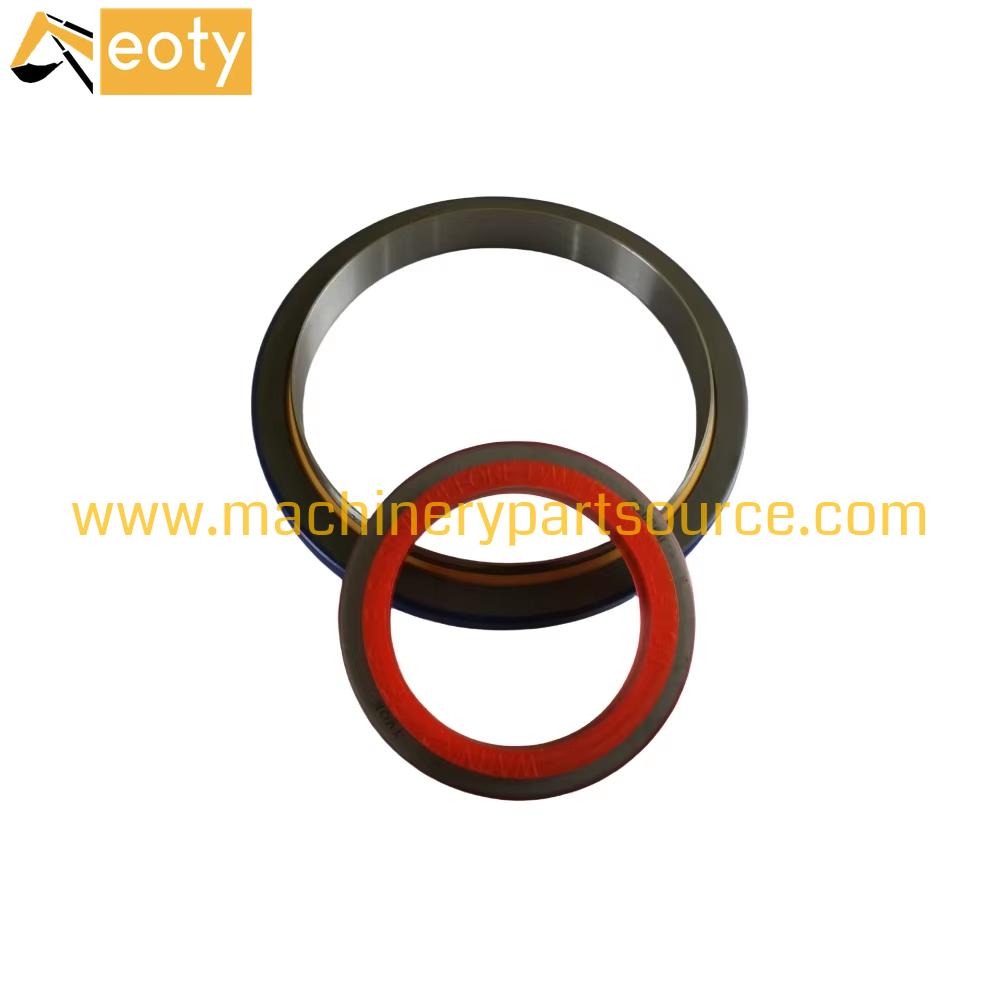
This premium Crankshaft Oil Seal is specifically engineered for the Caterpillar 3208 Diesel Engine. As a critical component for maintaining engine oil pressure and preventing leaks, this seal meets or exceeds OEM specifications. Our parts are sourced from ISO-certified manufacturers and are available for global shipping, serving major markets including North America, Europe, Southeast Asia, the Middle East, and Australia. Whether you are a heavy equipment dealer or a fleet maintenance manager, trust this seal to deliver reliable performance in demanding industrial applications.
Key Features & Benefits
Precision Engineering: Manufactured to exact OEM dimensions for a perfect, leak-free fit on the Caterpillar 3208 crankshaft.
Durable Material: Constructed from high-grade nitrile rubber (NBR) with a metal outer casing, providing excellent resistance to oil, heat, and wear.
Extended Service Life: Designed to withstand high rotational speeds and temperature fluctuations, reducing downtime and maintenance frequency.
Cost-Effective Solution: A direct replacement for OEM parts 7C6660 and 7W3200, offering factory-level quality at a competitive price.
Technical Specifications
Specification
Detail
Part Number
7C6660, 7W3200
Engine Application
Caterpillar 3208
Part Type
Crankshaft Oil Seal (Main Seal)
Material
Nitrile Rubber (NBR) with Steel Case
Position
Front or Rear (Please verify with original part)
OEM Cross Reference
7C6660, 7W3200
OEM Cross-Reference
This oil seal is a direct replacement for the following original Caterpillar part numbers:
7C6660
7W3200
Note: Always compare your old seal with the physical dimensions (inner diameter, outer diameter, width) to ensure correct fitment.
Compatibility
Engine Model: Caterpillar 3208 (Naturally Aspirated and Turbocharged variants).
Common Applications: Caterpillar industrial engines, generator sets, marine engines, and heavy equipment (e.g., Caterpillar 613, 615, 623, 633, 639, 651, 657, 666, 769, 772, 773 trucks and loaders).
Year Range: Primarily used in models manufactured from the late 1970s through the 1990s.
Global Supply & Distribution
We specialize in the global export of heavy-duty diesel engine parts. Our logistics network ensures:
Worldwide Shipping: Reliable delivery via sea, air, and express courier (DHL, FedEx, UPS, TNT).
Fast Dispatch: Orders are processed within 24 hours from our warehouses in North America and Asia.
Major Markets Served: USA, Canada, UK, Germany, France, Australia, UAE, Saudi Arabia, Singapore, and South Africa.
Port-to-Port Delivery: Efficient shipping to major ports like Rotterdam, Shanghai, Dubai, and Los Angeles.
Quality Assurance
Manufacturing Standard: ISO 9001:2015 certified production facilities.
Testing: Each seal undergoes rigorous inspection for dimensional accuracy, hardness, and tensile strength.
Warranty: 12-month warranty against manufacturing defects under normal operating conditions.
FAQ
Q1: Is this seal for the front or rear of the Caterpillar 3208 engine? A: The part numbers 7C6660 and 7W3200 are commonly used for the front crankshaft seal, but dimensions vary. We recommend measuring your old seal (Inner Diameter = 3.937″ / 100mm, Outer Diameter = 5.118″ / 130mm, Width = 0.472″ / 12mm) to confirm. If unsure, please contact us with your engine serial number.
Q2: How do I install this crankshaft oil seal correctly? A: Ensure the crankshaft surface is clean and free of burrs. Lubricate the seal lip with engine oil before installation. Use a seal driver tool to press the seal evenly into the housing until it is flush. Avoid hammering directly on the seal to prevent deformation.
Q3: What causes a new oil seal to leak shortly after installation? A: Common causes include: (1) A worn or grooved crankshaft surface requiring a speedi-sleeve. (2) Incorrect seal depth or misalignment. (3) High crankcase pressure due to a clogged breather. (4) Using an inferior quality seal that does not match OEM hardness specifications.
Inquiry Form
Send Inquiry
Leave your email and phone / WhatsApp so sales can follow up directly.