
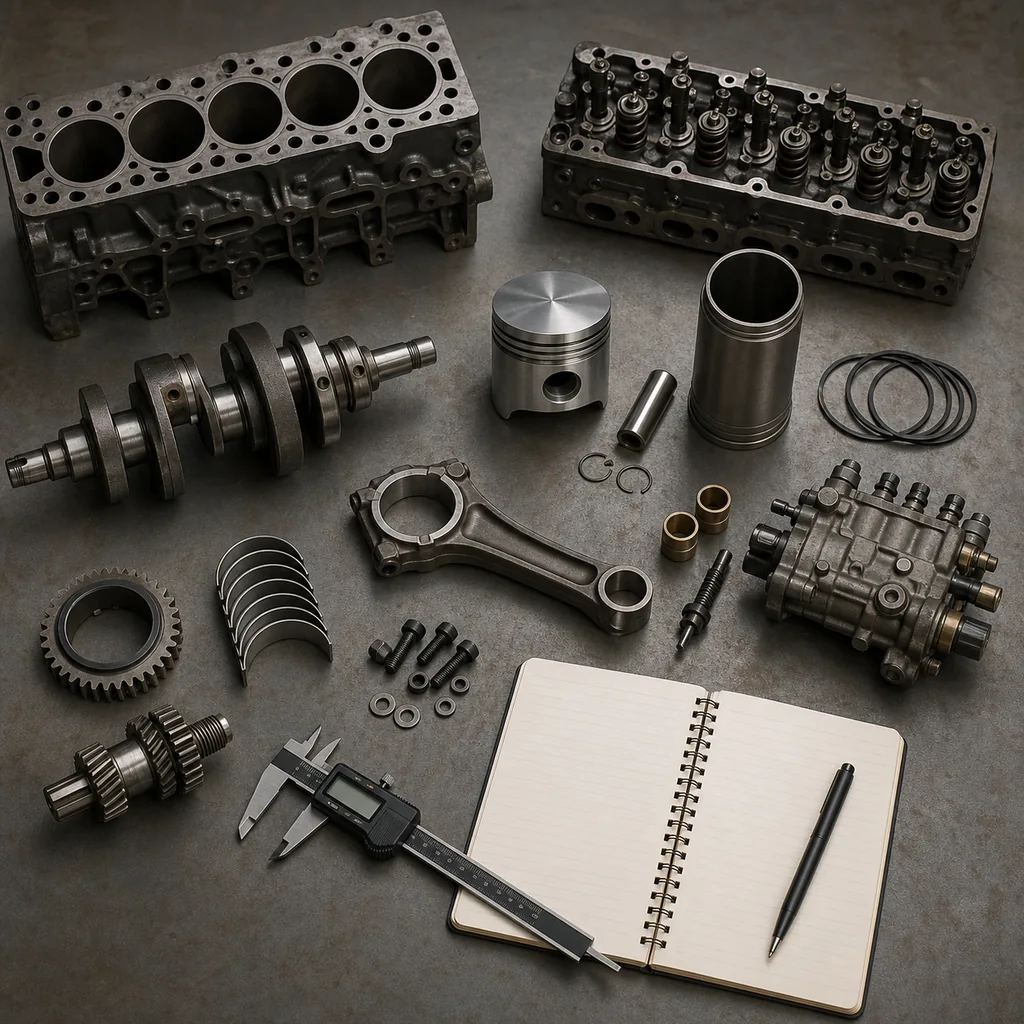
This identification guide gives you a systematic method to locate and record the markings, numbers, and dimensions on key Cummins 6BT engine components. By the end you will have everything needed to cross-reference our catalog and request the correct Cummins 6BT replacement parts with confidence.
Introduction to the 6BT Engine Parts Identification
The Cummins 6BT is a 5.9‑litre inline‑six turbo diesel from the long‑running B series. Because it has been used in automotive, industrial, agricultural, and marine applications for decades, dozens of factory‑ and aftermarket‑variants exist. Mismatched parts cause costly downtime, so precise identification is critical. This guide focuses on visual cues, stampings, and measurements you can check in the field, allowing you to match your hardware to the correct 6BT engine parts in our catalog.
Locating the Engine Model Plate and Serial Number
The engine model plate and serial number are the primary references for any parts lookup. Start here every time.
- Model plate: Usually attached to the gear housing on the front‑left side of the engine, or to the valve cover. It states the engine model (e.g., 6BTAA, 6BTA) and often the rated power and application data.
- Serial number: Stamped on a flat machined pad on the right side of the cylinder block, near the fuel injection pump. It may also be on a tag adjacent to the model plate.
Write down the complete serial number and the exact model designation. These two pieces of information unlock the most accurate part lists and supersession records.
Note: Exact plate and stamping locations can vary by production year and end‑user specification. If the tag is missing, check for secondary stamps on the block before proceeding.
Casting Marks and Part Number Locations on Key Components
When you need an individual component, such as a 6BT piston or a 6BT pump, you must often identify it without the complete engine tag. The following table lists the typical locations of casting or stamped numbers on major 6BT assemblies.
| Component | Number Location | What to Record |
|---|---|---|
| Cylinder block | Left side, near the oil filter adapter or above the starter | Casting number (raised or indented), date clock, foundry mark |
| Cylinder head | Intake side, between valve springs or near the injector bores | Casting number, injector bore size (if visible) |
| Crankshaft | Front counterweight or rear flange | Forging or casting number, journal size code |
| Connecting rod / rod cap | Side face of the rod beam and cap | Forging number, weight code, orientation marks |
| Piston | Inside the skirt, near the wrist‑pin boss | Part number, diameter, manufacturer symbol |
| Fuel injection pump (VE/VP44) | Identification plate on the pump body | Make (Bosch, Zexel), type code, governor number |
| Water pump | Housing flange or backing plate | Casting number, pulley diameter, bolt pattern |
Always photograph or copy the numbers exactly as they appear – even a single digit change can indicate a different machining operation.
Step‑by‑Step Identification Checklist
Use this checklist to gather all necessary information before searching for Cummins 6BT replacement parts. Check off each step to avoid missing a detail.
- Locate engine serial number and model plate. Record the full string and any suffix letters (e.g., “6BTAA” vs “6BT”).
- Record casting numbers from the block and cylinder head. These often appear as 7‑ to 10‑digit numbers, sometimes with a dash.
- Check for date codes and manufacturer marks. Look for clock‑face stamps or letter codes that indicate model year and plant.
- Measure key dimensions if accessible. Bore, stroke, and rod length can be verified with simple tools if the head or pan is off. Even external measurements like pulley dimensions help narrow variants.
- Compare gathered data with known 6BT specifications. Cross‑reference the serial number break points and casting‑number charts available in the official Cummins service literature or our applications team.
Component Map and Related Part Categories
The table below maps major engine functions to the parts you are likely to replace, with quick‑identification tips. This is where your secondary keywords like 6BT bearing, 6BT pump, and 6BT piston fit naturally into the workflow.
| System / Part Group | Identification Tip | Common Query Examples |
|---|---|---|
| Piston and ring sets | Measure piston diameter (standard or oversize) and pin diameter. Check the combustion bowl shape (e.g., shallow for direct injection). | 6BT piston set, 6BT ring set |
| Main and rod bearings | Verify crankshaft journal size (standard, 0.25 mm, 0.50 mm undersize). The bearing shell often has a part number etched on the back. | 6BT main bearing, 6BT rod bearing |
| Fuel injection pump | Identify the pump type: rotary VE‑series (pre‑1998) or electronic VP44 (1998‑2003). Look at the governor link and external electronics. | 6BT fuel injection pump, 6BT VE pump |
| Water pump | Count bolt holes in the pulley flange (typically 4 or 6) and note if it has a ribbed or V‑belt. The housing shape also varies between automotive and industrial models. | 6BT water pump |
| Cylinder head and gasket set | The gasket must match the head‑type: “low flow” (early) or “high flow” (later). Check the thickness and fire‑ring design. | 6BT cylinder head, 6BT gasket set |
| Oil pump and front cover | Front‑cover casting number indicates gear‑train configuration. Oil pump pickup tube height must match the oil pan. | 6BT oil pump |
| Engine block assembly | When rebuilding, the block casting number and main‑bearing bore size are essential. Some blocks have piston‑cooling nozzle bosses; others do not. | 6BT engine block |
Related Parts
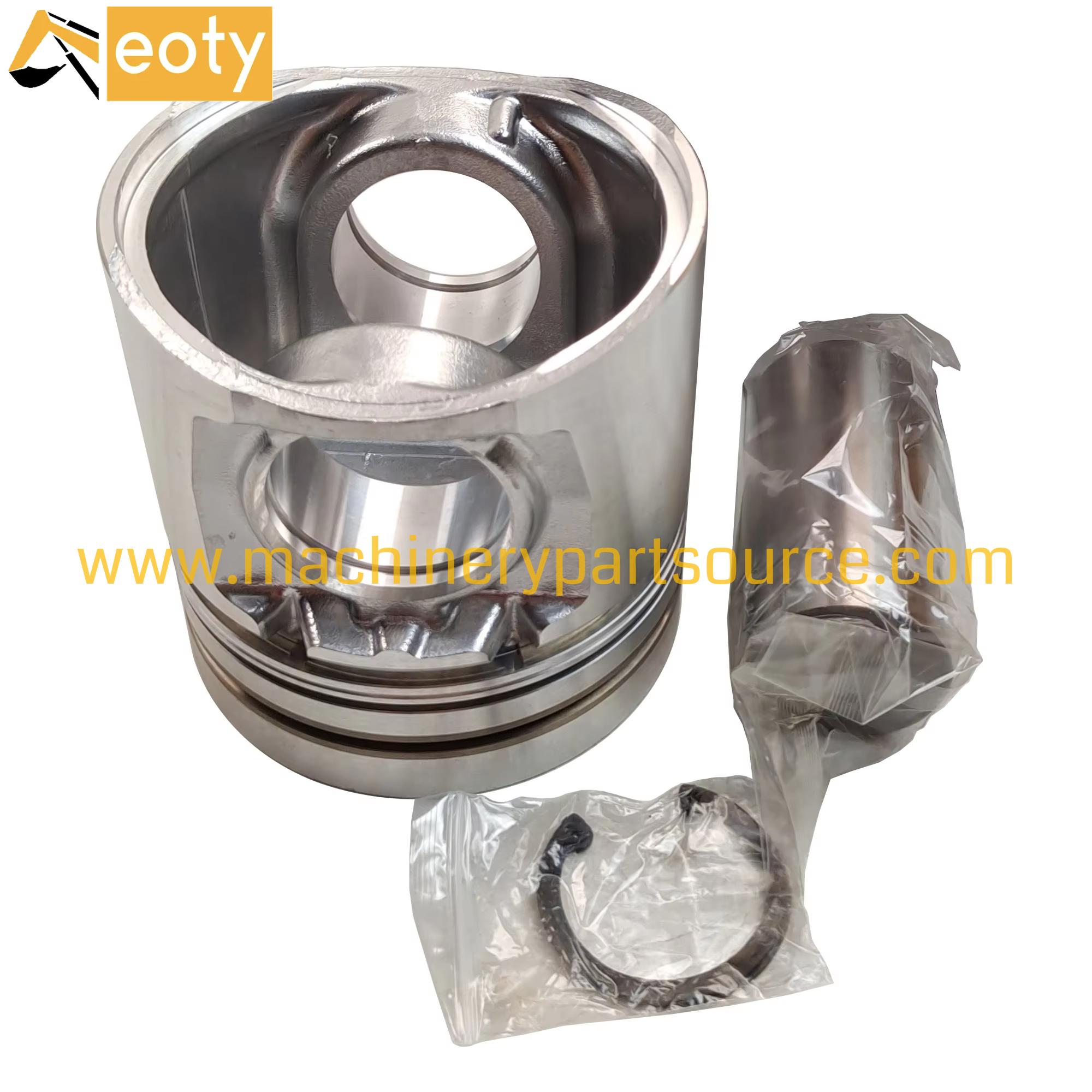
3907156 Engine Piston for Cummins 4BT 6BT 3.9L 5.9L Diesel Engine, Case Tractor 2096 5120 Excavator
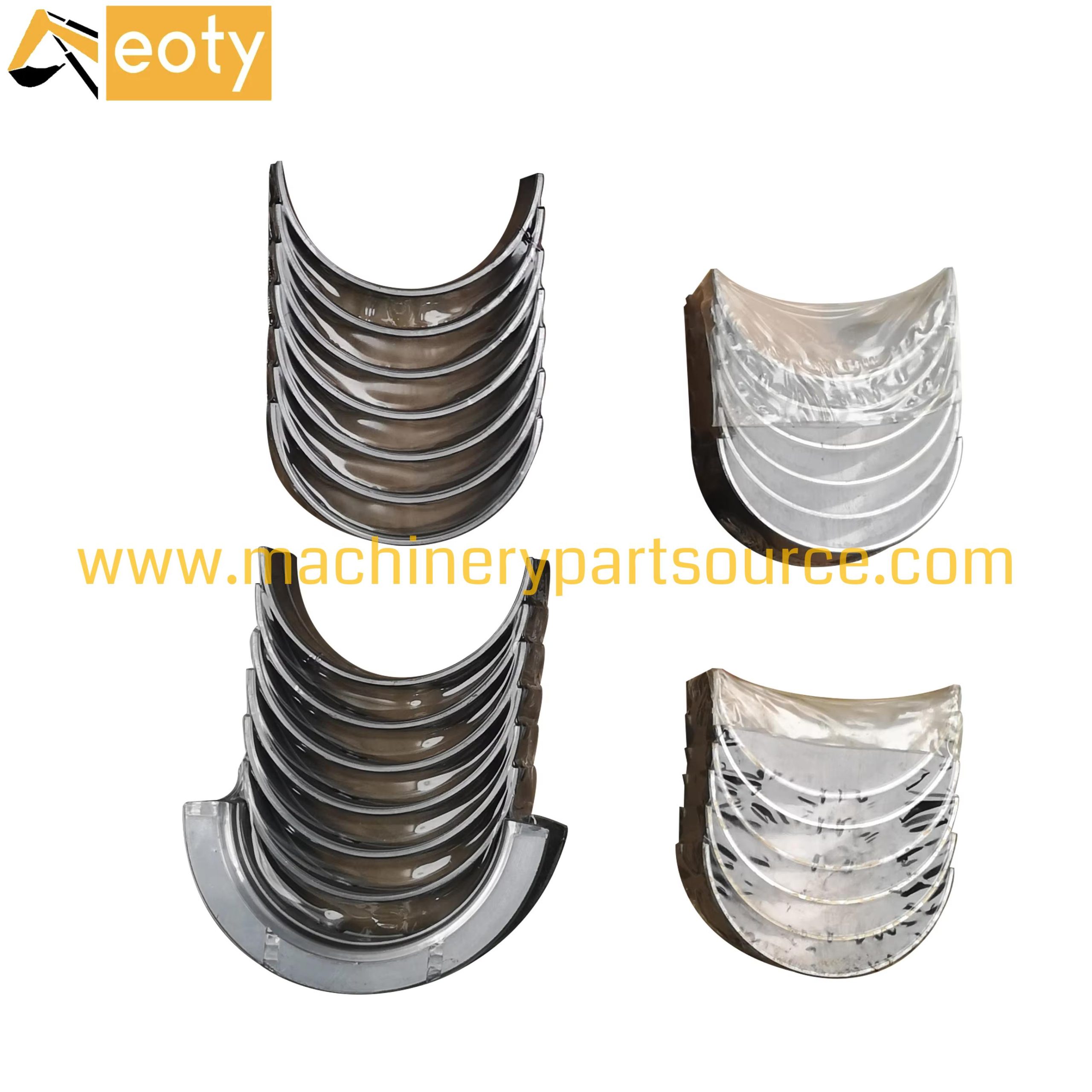
Cummins 6BT Engine Main Bearing & Connecting Rod Bearing 0.25 Undersize for B Series Diesel
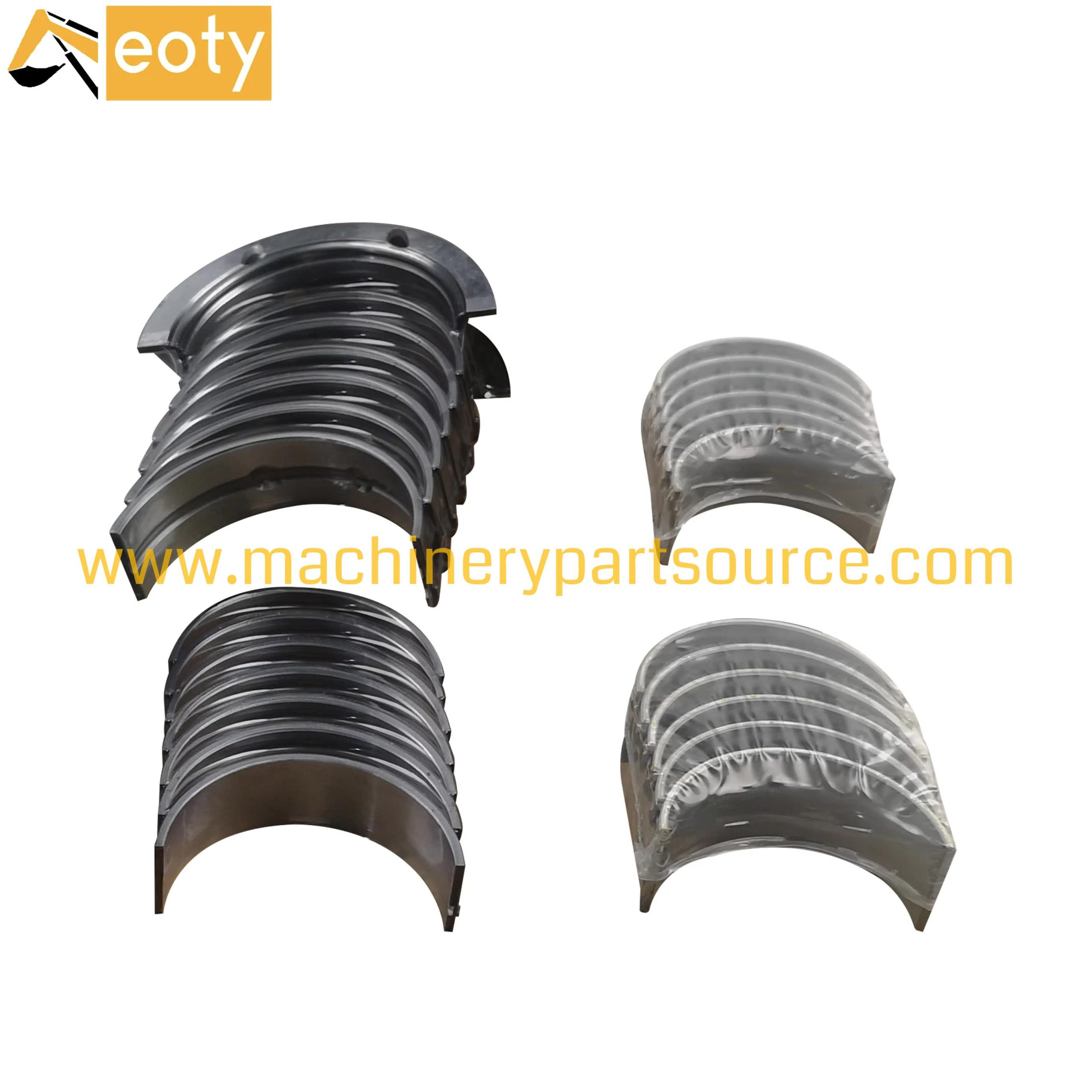
Cummins 6BT Main & Connecting Rod Bearing Set 0.50mm Oversize 3939861
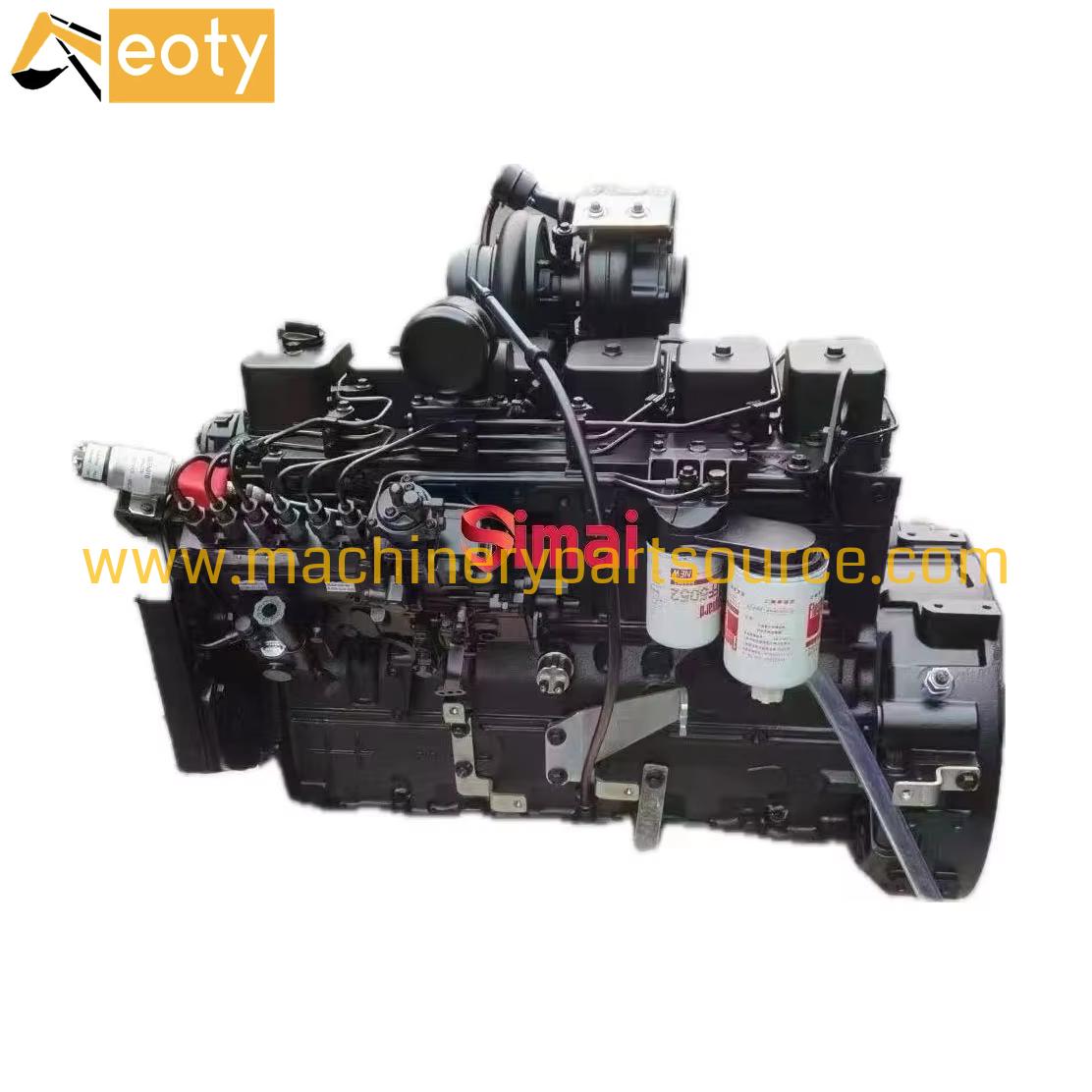
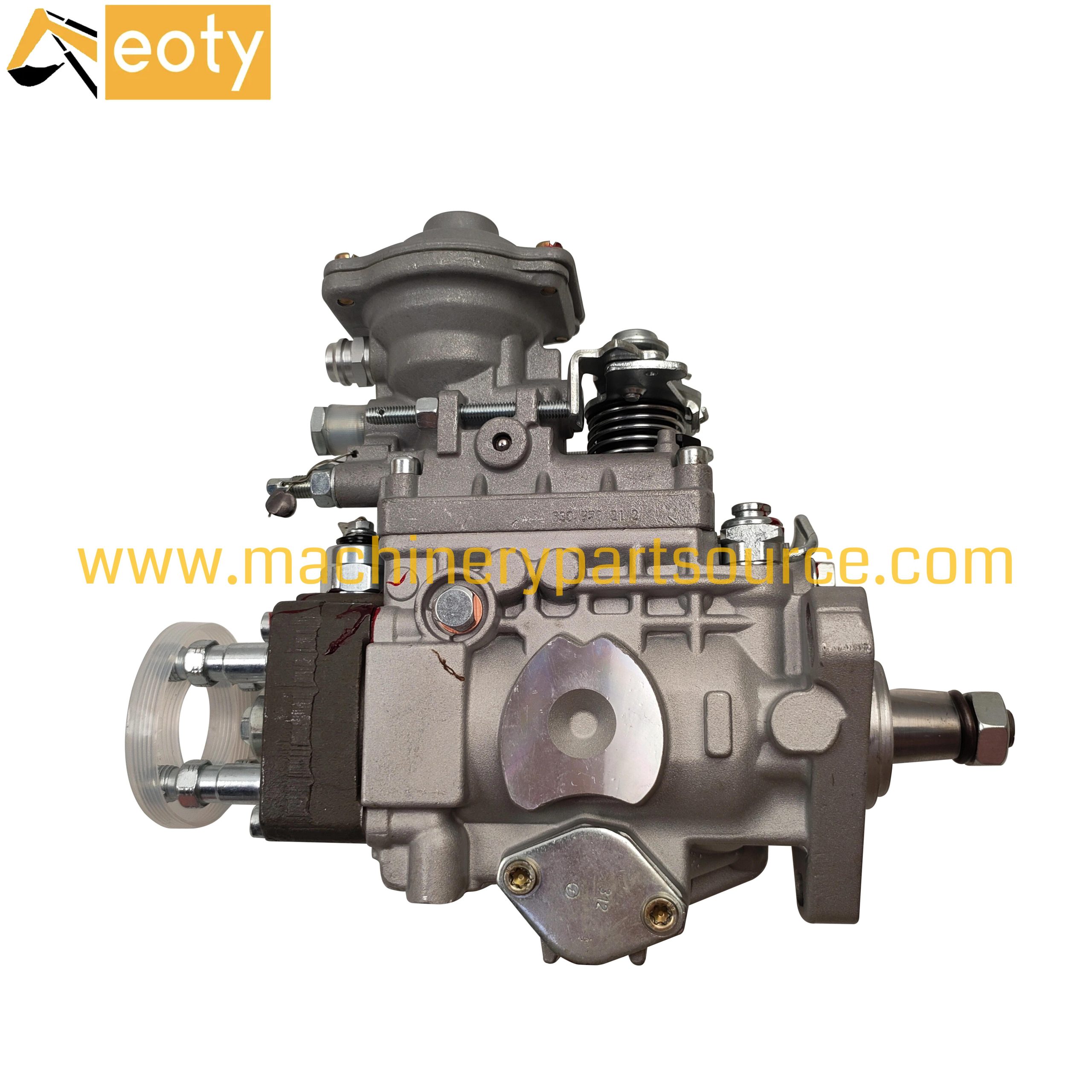
Diesel Pump 4BT Fuel Injection Pump VE4 12F1250 for Cummins Diesel Engine
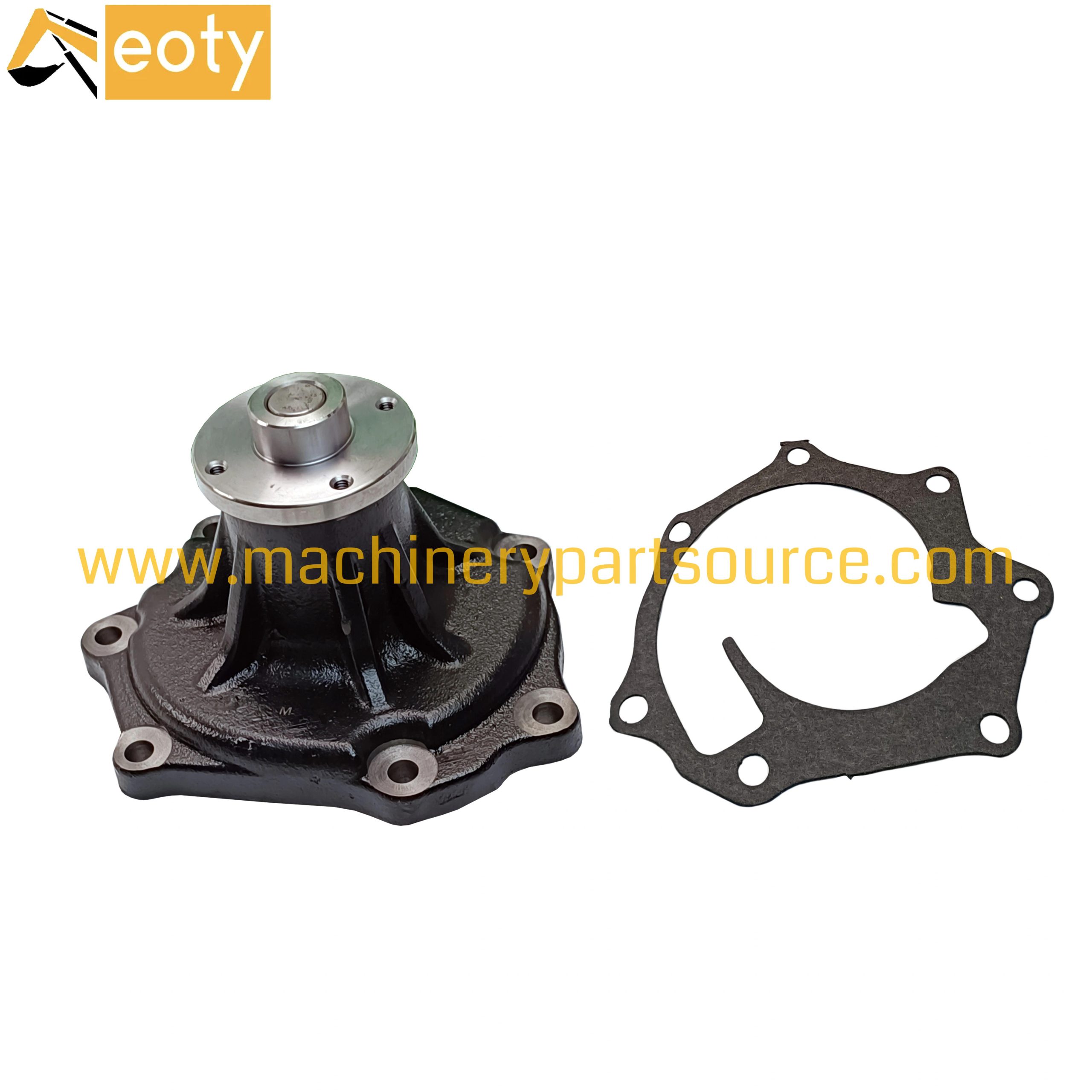
Nissan Machinery TD42 Diesel Engine Water Pump 21010-34t25
Once you have gathered the numbers from your specific components, you can search our catalog using those identifiers.
How to Use This Guide to Request Parts from Our Catalog
After completing the identification steps above, you will have a list of serial numbers, casting numbers, and measurements. This information is your key to a precise quotation.
- Gather all details before browsing. Write down every number, photo, and measurement you collected. This saves time and avoids ordering errors.
- Use the “Product Queries” section. Enter the part number or component type to see matching inventory. For example, type “6BT piston set” to filter available options.
- Submit a detailed request. When you find a likely match, use the inquiry form to send us your engine serial number and the component casting number. Mention any measurements you took.
- Our team verifies fitment. If you provide the identification information from this guide, our applications specialists can check supersessions and cross‑references before you commit to an order.
Send your part number, engine model or machine model
Our team can check compatible excavator and diesel engine parts for your RFQ.
Frequently Asked Questions on 6BT Engine Parts Identification
These answers address the most common misunderstandings we encounter, helping you reduce identification errors.
Are all 6BT engines the same?
No. Industrial, marine, agricultural, and automotive variants differ in cooling systems, injection pumps, piston bowls, and front‑end accessories. The serial number tells you which specification the engine was built to. Using an automotive part in a marine application, for instance, can lead to premature failure.
Where is the part number on a 6BT piston?
The part number is almost always stamped on the inside of the piston skirt, near the wrist‑pin boss. You may need strong light and a mirror to read it. Look also for a manufacturer symbol (e.g., Mahle, Kolbenschmidt) and the bore size in millimetres.
Can I use casting numbers alone to order parts?
Casting numbers are a good start, but they are not unique part numbers. A single casting can be machined into several different finished parts. Always verify the casting number against the engine serial number. Some designs changed but the casting number remained the same, while other times a number changed without a physical alteration.
How do I distinguish between 6BT and 6BTA?
The “A” suffix indicates an aftercooled (charge‑air cooled) engine. Visually, a 6BTA has an intake‑manifold or dedicated aftercooler, whereas a non‑aftercooled 6BT does not. Check the model designation on the tag. The turbocharger and injectors often differ as well.
My engine serial number is unreadable – what do I do?
Use a wire brush to clean the stamping area; sometimes only a few characters survive. If truly illegible, collect all the casting numbers and date codes from the block, head, and injection pump. These can be combined to narrow the build range. Submit everything to our technical team for a manual identification.